Flat-pack Production
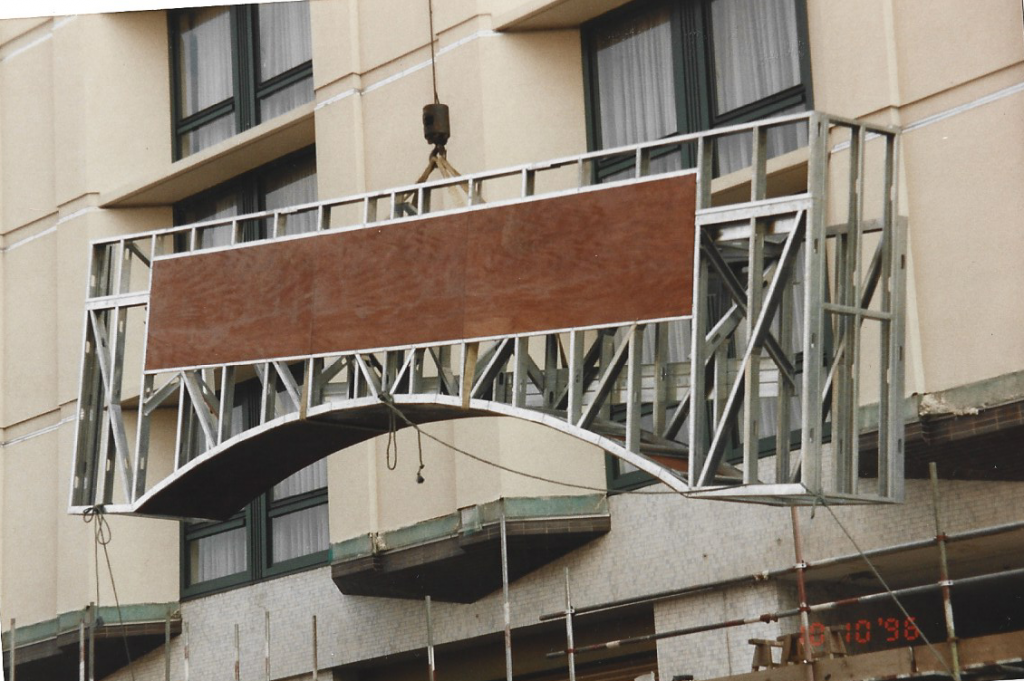
The basis of the system that John Tucker designed and that I am following with my low cost housing is to carry out as much of the construction process as possible in a factory, where the work is free of the influence of the weather and can be closely controlled. In this case the structure of the building is made up of prefabricated columns and beams, walls, floors and roofs which can be delivered to site, loaded flat on the bed of a wagon with a telescopic hoist so that the panels can be lifted straight into the fixing position and secured to each other without the need for intermediate handling.
It is essential that the panels are assembled in the off-site factory in a jig which ensures every component is correctly and accurately located, so that each completed panel, when it is lifted off the jig requires no further work to be done to it before it is fixed in position. This includes weather-sheathing the outside of the panels so that following trades on site can work in safe and weather-free conditions. Because of the use of a dead flat jig, the training of staff to carry out the work is simple and the average employee can learn the job in a week under the guidance of an experienced foreman.
Of course, it is vital that the panels are loaded onto the wagon in the correct sequence so that they can be unloaded on site directly into the fixing position. Thus the ground floor panels will be on top of the load and the roof panels will be at the bottom of the load and will be the last to be unloaded. It is calculated that a one-bedroom flat will consist of 26 panels, excluding the roof which should form a load about 2.6 metres (8 feet) high. The studs and rafters are slotted at 2-feet centres, which provides convenient locations for lifting hooks.
Next week I will tell you about the assembly of the building on site.
If you wish to get in touch with me about any of the matters I raise in my blogs, you can contact me through my website or at mike@mikehillier.co.uk.